

In the world of Canadian architecture, few themes are as compelling as the relationship between land, climate, and identity. Canada’s cities are often defined by contrasts: dense downtown skylines set against vast natural landscapes, historic districts beside experimental public buildings, and urban growth shaped by some of the most demanding environmental conditions on earth. With the Canada CityVision Competition, the central question becomes both simple and expansive: how might architecture imagine a future that is distinctly Canadian?
Like other CityVision initiatives, the Canadian edition is less about fixed masterplans and more about opening up new ways of seeing. It invites architects, designers, and urban thinkers to speculate freely—using Canada not just as a geographic setting, but as a cultural and ecological framework. From Toronto and Vancouver to Montréal, Calgary, and the North, the country offers a powerful stage for visionary design.
Setting the stage
Canada has long occupied a special place in architectural debate. It is a country where indigenous histories, colonial urban grids, modernist experiments, and contemporary sustainable design all intersect. Any attempt to rethink Canadian urbanism must therefore grapple with time, territory, and coexistence.
That is precisely what makes a Canadian CityVision competition so rich. Rather than asking for conventional proposals, it encourages participants to question inherited models of development and imagine alternatives. What would a Canadian city look like if climate resilience were not an afterthought, but its defining principle? How might public space evolve in places shaped by migration, multilingualism, and extreme seasonal change? And what happens when architecture begins not with the building, but with the landscape itself?
For anyone exploring Canadian architecture today, these questions feel immediate. The country’s urban centers are growing rapidly, yet they remain deeply tied to issues of ecology, affordability, mobility, and memory. A speculative competition creates space to think beyond policy cycles and real-estate pressures, allowing design to become a cultural act of reflection as much as construction.
Just as visionary architecture competitions ask designers to rethink how people move through and experience cities, Canada’s digital culture is also reshaping everyday forms of interaction and leisure. One revealing example is the growing popularity of online gaming platforms, which create their own virtual environments of navigation, design, and user engagement. For many users comparing the top real money casinos in Canada, the experience is not so different from moving through a carefully planned urban space: interfaces, flows, accessibility, atmosphere, and trust all matter. In a different register, this digital layer reflects the same broader Canadian reality that architecture must also confront—a society where physical and virtual environments increasingly overlap.
A country of urban contrasts
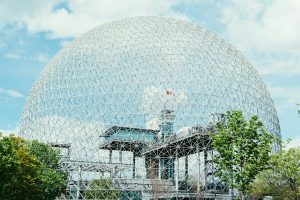
Part of Canada’s architectural fascination lies in its diversity of urban conditions. Toronto projects vertical density and global ambition. Montréal blends European influence with North American scale. Vancouver is framed by mountains and water, making the tension between urban expansion and natural preservation impossible to ignore. Ottawa carries institutional symbolism, while prairie cities and northern communities raise completely different questions about infrastructure, isolation, and adaptation.
This means that a Canada-focused competition cannot rely on a single image of the city. Instead, it must embrace multiplicity. Canadian architecture is not one story but many stories unfolding across enormous distances. The challenge is not merely to design buildings, but to imagine new relationships between region and nation, center and edge, permanence and transformation.
In this sense, Canada becomes an ideal subject for speculative work. It is a place where architecture is constantly negotiating between monumentality and humility, between technological innovation and environmental restraint. A visionary competition can bring these tensions to the surface and turn them into design material.
The themes
A Canadian edition of CityVision naturally lends itself to several overlapping themes:
Climate and resilience – In a country marked by snow, ice, flooding, fire, and dramatic seasonal shifts, architecture must respond to environmental realities with intelligence and imagination.
Landscape and territory – Canadian urbanism cannot be separated from the scale of the land itself. Cities are shaped by rivers, forests, coastlines, and vast open territories that challenge conventional planning models.
Memory and identity – Canadian cities carry layered narratives of indigenous presence, migration, industrial development, and cultural hybridity. Design must contend with all of them.
Public life and inclusion – From libraries and transit hubs to winter streetscapes and civic plazas, architecture in Canada often plays a key role in fostering accessibility, collective life, and social cohesion.
These themes give the competition a distinct tone. It is not only about futuristic form-making, but about how architecture can respond to the lived realities of place.
Why Canada matters now
If speculative design has become increasingly important, it is because cities everywhere are facing uncertainty. Canada is no exception. Housing pressure, climate change, infrastructure demands, and shifting demographics are all reshaping the national conversation around design. In that context, a competition like Canada CityVision offers something valuable: not immediate solutions, but conceptual clarity.
It allows designers to test possibilities that professional practice often cannot. They can imagine floating neighborhoods, climate-adaptive civic spaces, hybrid natural-urban infrastructures, or new public institutions rooted in reconciliation and ecological stewardship. Some ideas may seem radical, but that is precisely the point. Competitions like this widen the field of what can be discussed.
For students, architects, and urban researchers, that openness is essential. It reminds us that cities are not finished objects. They are ongoing cultural projects, and architecture remains one of the most powerful ways to challenge assumptions about how we live together.
The spirit of the competition
As with the New York edition, the Canadian page should be understood as part of a broader CityVision philosophy. These competitions are not only showcases for visual experimentation; they are platforms for narrative thinking. They ask participants to imagine cities not as static systems, but as evolving stories shaped by politics, history, ecology, and desire.
Applied to Canada, that spirit becomes especially potent. Here, design cannot simply import global trends. It must respond to local climates, layered identities, and the sheer complexity of a country that is both highly urbanized and deeply connected to wilderness. The most compelling proposals are likely to be those that understand architecture as mediation: between people and landscape, technology and tradition, present urgency and future possibility.
A broader cultural snapshot

Canada’s architectural culture has often been quieter than that of some global capitals, but that understatement can be misleading. Beneath it lies a strong tradition of experimentation in housing, public infrastructure, landscape design, and civic architecture. Canadian architects and planners have repeatedly confronted questions that are now global: how to densify responsibly, how to design for cold climates, how to preserve public space, and how to build with greater environmental accountability.
A Canada CityVision Competition would capture that moment. It would reflect a country in transition—one rethinking not only how its cities grow, but what values they should embody. In this way, the competition becomes more than an architectural exercise. It becomes a portrait of a society asking what kind of future it wants to inhabit.
Key facts briefly
Organizer: CityVision Focus: Speculative architecture and urban futures in Canada Themes: Climate resilience, landscape, public space, identity, and urban transformation Scope: Open to global designers, architects, and urban thinkers Objective: To use visionary proposals to rethink Canadian cities and territories Approach: Conceptual, research-driven, and future-oriented
Beyond the image of the skyline
When people think of architecture, they often think first of skylines. But in Canada, the story is broader than that. It includes waterfronts, forests, transit corridors, civic institutions, northern settlements, and suburban fabrics in transition. It includes the spaces between towers just as much as the towers themselves.
That is why a Canadian CityVision competition matters. It pushes beyond the postcard image of the city and asks deeper questions about belonging, adaptation, and collective life. The best proposals do not simply decorate the future; they interrogate it.
Why it still resonates
CityVision’s enduring relevance lies in its willingness to treat architecture as a speculative discipline. In a moment when many urban conversations are dominated by immediate constraints, competitions like this preserve a space for bold thinking. They remind us that before cities are built, they are imagined.
Canada offers especially fertile ground for that imagination. Its cities are still evolving, its landscapes remain central to its identity, and its design culture continues to wrestle with some of the defining questions of our era. A Canada CityVision page therefore feels not like an add-on, but like a natural extension of the project’s larger mission: to ask what cities can become when imagination is taken seriously.